July 28, 2021
June 16, 2021
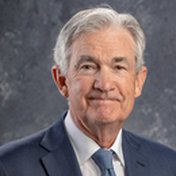 Jerome H. Powell
July 28, 2021 FOMC Statement
FOMC statement
Federal Reserve issues FOMC statement
For release at 2:00 p.m. EDT
The Federal Reserve is committed to using its full range of tools to support the U.S. economy in this challenging time, thereby promoting its maximum employment and price stability goals.
Progress With progress on vaccinations has reduced the spread of COVID-19 in the United States. Amid this progress and strong policy support, indicators of economic activity and employment have strengthened. continued to strengthen. The sectors most adversely affected by the pandemic remain weak but have shown improvement. improvement but have not fully recovered. Inflation has risen, largely reflecting transitory factors. Overall financial conditions remain accommodative, in part reflecting policy measures to support the economy and the flow of credit to U.S. households and businesses.
The path of the economy will continues to depend significantly on the course of the virus. Progress on vaccinations will likely continue to reduce the effects of the public health crisis on the economy, but risks to the economic outlook remain.
The Committee seeks to achieve maximum employment and inflation at the rate of 2 percent over the longer run. With inflation having run persistently below this longer-run goal, the Committee will aim to achieve inflation moderately above 2 percent for some time so that inflation averages 2 percent over time and longer‑term inflation expectations remain well anchored at 2 percent. The Committee expects to maintain an accommodative stance of monetary policy until these outcomes are achieved. The Committee decided to keep the target range for the federal funds rate at 0 to 1/4 percent and expects it will be appropriate to maintain this target range until labor market conditions have reached levels consistent with the Committee's assessments of maximum employment and inflation has risen to 2 percent and is on track to moderately exceed 2 percent for some time. In addition, Last December, the Federal Reserve will Committee indicated that it would continue to increase its holdings of Treasury securities by at least $80 billion per month and of agency mortgage‑backed securities by at least $40 billion per month until substantial further progress has been made toward the Committee's its maximum employment and price stability goals. Since then, the economy has made progress toward these goals, and the Committee will continue to assess progress in coming meetings. These asset purchases help foster smooth market functioning and accommodative financial conditions, thereby supporting the flow of credit to households and businesses.
In assessing the appropriate stance of monetary policy, the Committee will continue to monitor the implications of incoming information for the economic outlook. The Committee would be prepared to adjust the stance of monetary policy as appropriate if risks emerge that could impede the attainment of the Committee's goals. The Committee's assessments will take into account a wide range of information, including readings on public health, labor market conditions, inflation pressures and inflation expectations, and financial and international developments.
Voting for the monetary policy action were Jerome H. Powell, Chair; John C. Williams, Vice Chair; Thomas I. Barkin; Raphael W. Bostic; Michelle W. Bowman; Lael Brainard; Richard H. Clarida; Mary C. Daly; Charles L. Evans; Randal K. Quarles; and Christopher J. Waller.
Implementation Note issued June 16, July 28, 2021
Our summary
What changed
- Upgraded the labor market language, noting activity and employment 'continued to strengthen' and that pandemic-affected sectors 'have shown improvement but have not fully recovered.'
- Adjusted the virus-risk sentence from 'will depend significantly' to 'continues to depend' on the course of the virus.
- Replaced the forward guidance on asset purchases with a reference to the December 2020 guidance, adding that the economy 'has made progress' toward the goals and that the FOMC 'will continue to assess progress in coming meetings.'
- Kept the federal funds rate target range at 0 to 1/4 percent and maintained the same balance sheet purchase pace and conditions for liftoff.
- The vote was unanimous, with all 11 members supporting the action.
Implications
The shift to 'continues to depend' and the explicit acknowledgment of progress toward the goals suggest the FOMC is laying groundwork to begin tapering asset purchases, likely later this year.
By referencing the December guidance and promising to 'assess progress in coming meetings,' the statement signals that the timing of any taper will be data-dependent and not yet committed, which markets may read as a modestly hawkish tilt toward eventual normalization.
Summary generated automatically from the statements. Not investment advice.
Implementation Note
The settings that put the decision into effect: the interest rate paid on reserves, the FOMC's instructions to the New York Fed's trading desk, and the discount rate. Changes are marked the same way as in the statement.
- The Board of Governors of the Federal Reserve System voted unanimously to establish the interest rate paid on reserve balances at 0.15 percent, effective July 29, 2021.1
- As part of its policy decision, the Federal Open Market Committee voted to authorize and direct the Open Market Desk at the Federal Reserve Bank of New York, until instructed otherwise, to execute transactions in the System Open Market Account in accordance with the following domestic policy directive: "Effective
June 17,July 29, 2021, the Federal Open Market Committee directs the Desk to: - Undertake open market operations as necessary to maintain the federal funds rate in a target range of 0 to 1/4 percent.
- Increase the System Open Market Account holdings of Treasury securities by $80 billion per month and of agency mortgage-backed securities (MBS) by $40 billion per month.
- Increase holdings of Treasury securities and agency MBS by additional amounts and purchase agency commercial mortgage-backed securities (CMBS) as needed to sustain smooth functioning of markets for these securities.
- Conduct overnight repurchase agreement operations with a minimum bid rate of 0.25 percent and with an aggregate operation limit of $500 billion; the aggregate operation limit can be temporarily increased at the discretion of the Chair.
- Conduct overnight reverse repurchase agreement operations at an offering rate of 0.05 percent and with a per-counterparty limit of $80 billion per day; the per-counterparty limit can be temporarily increased at the discretion of the Chair.
- Roll over at auction all principal payments from the Federal Reserve's holdings of Treasury securities and reinvest all principal payments from the Federal Reserve's holdings of agency debt and agency MBS in agency MBS.
- Allow modest deviations from stated amounts for purchases and reinvestments, if needed for operational reasons.
- Engage in dollar roll and coupon swap transactions as necessary to facilitate settlement of the Federal Reserve's agency MBS transactions."
- In a related action, the Board of Governors of the Federal Reserve System voted unanimously to approve the establishment of the primary credit rate at the existing level of 0.25 percent.
The Board of Governors of the Federal Reserve System voted unanimously to set the interest rate paid on required and excess reserve balances at 0.15 percent, effective June 17, 2021. Setting the interest rate paid on required and excess reserve balances 15 basis points above the bottom of the target range for the federal funds rate is intended to foster trading in the federal funds market at rates well within the Federal Open Market Committee's target range and to support the smooth functioning of short-term funding markets.Conduct repurchase agreement operations to support effective policy implementation and the smooth functioning of short-term U.S. dollar funding markets.
Press conference
July 28, 2021, 2:30 p.m. ET · Read the transcript
What Powell said that the statement didn't
- The chair said real GDP this year appears to be on track to post its fastest rate of increase in decades.
- The chair said the unemployment rate in June was 5.9 percent, which understates the shortfall in employment due to low labor force participation.
- The chair said the Fed has not reached substantial further progress on its goals and needs to see some strong job numbers before tapering asset purchases.
- The chair said the recent inflation overshoot is tied to a handful of categories like cars, airplane tickets, and hotels, and risks to inflation are probably to the upside in the near term.
- The chair announced the establishment of two standing repo facilities, one domestic and one for foreign and international monetary authorities, to serve as backstops in money markets.
Summary generated automatically from the transcript and the statement.