January 28, 2026
December 10, 2025
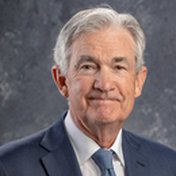 Jerome H. Powell
January 28, 2026 FOMC Statement
FOMC statement
Federal Reserve issues FOMC statement
For release at 2:00 p.m. EST
Available indicators suggest that economic activity has been expanding at a solid pace. Job gains have remained low, and the unemployment rate has shown some signs of stabilization. Inflation remains somewhat elevated.
The Committee seeks to achieve maximum employment and inflation at the rate of 2 percent over the longer run. Uncertainty about the economic outlook remains elevated. The Committee is attentive to the risks to both sides of its dual mandate and judges that downside risks to employment rose in recent months. mandate.
In support of its goals and in light of goals, the shift in the balance of risks, the Committee decided to lower maintain the target range for the federal funds rate by 1/4 percentage point at 3‑1/2 to 3-1/2 to 3‑3/4 percent. In considering the extent and timing of additional adjustments to the target range for the federal funds rate, the Committee will carefully assess incoming data, the evolving outlook, and the balance of risks. The Committee is strongly committed to supporting maximum employment and returning inflation to its 2 percent objective.
In assessing the appropriate stance of monetary policy, the Committee will continue to monitor the implications of incoming information for the economic outlook. The Committee would be prepared to adjust the stance of monetary policy as appropriate if risks emerge that could impede the attainment of the Committee's goals. The Committee's assessments will take into account a wide range of information, including readings on labor market conditions, inflation pressures and inflation expectations, and financial and international developments.
Voting for the monetary policy action were Jerome H. Powell, Chair; John C. Williams, Vice Chair; Michael S. Barr; Michelle W. Bowman; Susan M. Collins; Lisa D. Cook; Beth M. Hammack; Philip N. Jefferson; Alberto G. Musalem; Neel Kashkari; Lorie K. Logan; and Christopher J. Waller. Anna Paulson. Voting against this action were Stephen I. Miran, Miran and Christopher J. Waller, who preferred to lower the target range for the federal funds rate by 1/2 1/4 percentage point at this meeting; and Austan D. Goolsbee and Jeffrey R. Schmid, who preferred no change to the target range for the federal funds rate at this meeting.
For media inquiries, please email [email protected] or call 202-452-2955.
Implementation Note issued January 28, 2026
Available indicators suggest that economic activity has been expanding at a moderate pace. Job gains have slowed this year, and the unemployment rate has edged up through September. More recent indicators are consistent with these developments. Inflation has moved up since earlier in the year and remains somewhat elevated.
The Committee judges that reserve balances have declined to ample levels and will initiate purchases of shorter-term Treasury securities as needed to maintain an ample supply of reserves on an ongoing basis.
Implementation Note issued December 10, 2025
Our summary
What changed
- The FOMC held the federal funds rate at 3-1/2 to 3-3/4 percent, after cutting by 1/4 point in December.
- Economic activity is now described as expanding at a solid pace, up from moderate, with job gains low and unemployment stabilizing.
- The sentence on downside risks to employment was removed; the FOMC now only notes risks to both sides of the dual mandate.
- The balance sheet policy sentence about purchasing shorter-term Treasury securities was removed.
- The vote was 10-2, with Miran and Waller dissenting in favor of a 1/4 point cut; Goolsbee and Schmid no longer dissent.
Implications
The removal of the employment-risk language and the balance-sheet purchase plan suggests the FOMC sees less urgency to ease further, consistent with a pause after December's cut.
The shift to 'solid' growth and stabilized unemployment, while inflation remains elevated, signals a more neutral stance, with future moves dependent on incoming data.
Markets may interpret the dissents from two members favoring a cut as a sign of internal division, but the majority's hold suggests patience before any further easing.
Summary generated automatically from the statements. Not investment advice.
Implementation Note
The settings that put the decision into effect: the interest rate paid on reserves, the FOMC's instructions to the New York Fed's trading desk, and the discount rate. Changes are marked the same way as in the statement.
- The Board of Governors of the Federal Reserve System voted unanimously to
lowermaintain the interest rate paid on reserve balancestoat 3.65 percent, effectiveDecember 11, 2025.January 29, 2026. - As part of its policy decision, the Federal Open Market Committee voted to direct the Open Market Desk at the Federal Reserve Bank of New York, until instructed otherwise, to execute transactions in the System Open Market Account in accordance with the following domestic policy directive: "Effective
December 11, 2025,January 29, 2026, the Federal Open Market Committee directs the Desk to: - Undertake open market operations as necessary to maintain the federal funds rate in a target range of 3-1/2 to 3-3/4 percent.
- Conduct standing overnight repurchase agreement operations at a rate of 3.75 percent.
- Conduct standing overnight reverse repurchase agreement operations at an offering rate of 3.5 percent and with a per-counterparty limit of $160 billion per day.
- Increase the System Open Market Account holdings of securities through purchases of Treasury bills and, if needed, other Treasury securities with remaining maturities of 3 years or less to maintain an ample level of reserves.
- Roll over at auction all principal payments from the Federal Reserve's holdings of Treasury securities. Reinvest all principal payments from the Federal Reserve's holdings of agency securities into Treasury bills."
- In a related action, the Board of Governors of the Federal Reserve System voted unanimously to approve the establishment of the primary credit rate at the existing level of 3.75 percent.
In a related action, the Board of Governors of the Federal Reserve System voted unanimously to approve a 1/4 percentage point decrease in the primary credit rate to 3.75 percent, effective December 11, 2025. In taking this action, the Board approved requests to establish that rate submitted by the Boards of Directors of the Federal Reserve Banks of New York, Philadelphia, St. Louis, and San Francisco.
Press conference
January 28, 2026, 2:30 p.m. ET · Read the transcript
What Powell said that the statement didn't
- The chair said the federal funds rate is within a range of plausible estimates of neutral after cumulative cuts of 175 basis points since September 2024.
- The chair said the temporary federal government shutdown likely weighed on economic activity last quarter, with effects expected to reverse this quarter.
- The chair said total nonfarm payrolls declined at an average pace of 22,000 per month over the last three months, while private payrolls rose at an average pace of 29,000 per month.
- The chair said most of the overrun in goods prices is from tariffs, and core PCE inflation is running just a bit above 2 percent excluding tariff effects on goods.
- The chair said he attended the Supreme Court hearing on the Lisa Cook case because it is perhaps the most important legal case in the Fed’s 113-year history, and he declined to respond to criticism from Treasury Secretary Scott Bessent.
Summary generated automatically from the transcript and the statement.