January 27, 2021
December 16, 2020
Statement·Presser·Minutes·Policy
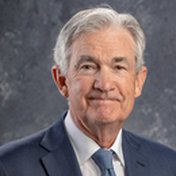 Jerome H. Powell
January 27, 2021 FOMC Statement
FOMC statement
Federal Reserve issues FOMC statement
For release at 2:00 p.m. EST
The Federal Reserve is committed to using its full range of tools to support the U.S. economy in this challenging time, thereby promoting its maximum employment and price stability goals.
The COVID-19 pandemic is causing tremendous human and economic hardship across the United States and around the world. Economic The pace of the recovery in economic activity and employment have continued to recover but remain well below their levels at has moderated in recent months, with weakness concentrated in the beginning of sectors most adversely affected by the year. pandemic. Weaker demand and earlier declines in oil prices have been holding down consumer price inflation. Overall financial conditions remain accommodative, in part reflecting policy measures to support the economy and the flow of credit to U.S. households and businesses.
The path of the economy will depend significantly on the course of the virus. virus, including progress on vaccinations. The ongoing public health crisis will continue continues to weigh on economic activity, employment, and inflation in the near term, inflation, and poses considerable risks to the economic outlook over the medium term. outlook.
The Committee seeks to achieve maximum employment and inflation at the rate of 2 percent over the longer run. With inflation running persistently below this longer-run goal, the Committee will aim to achieve inflation moderately above 2 percent for some time so that inflation averages 2 percent over time and longer-term longer‑term inflation expectations remain well anchored at 2 percent. The Committee expects to maintain an accommodative stance of monetary policy until these outcomes are achieved. The Committee decided to keep the target range for the federal funds rate at 0 to 1/4 percent and expects it will be appropriate to maintain this target range until labor market conditions have reached levels consistent with the Committee's assessments of maximum employment and inflation has risen to 2 percent and is on track to moderately exceed 2 percent for some time. In addition, the Federal Reserve will continue to increase its holdings of Treasury securities by at least $80 billion per month and of agency mortgage-backed mortgage‑backed securities by at least $40 billion per month until substantial further progress has been made toward the Committee's maximum employment and price stability goals. These asset purchases help foster smooth market functioning and accommodative financial conditions, thereby supporting the flow of credit to households and businesses.
In assessing the appropriate stance of monetary policy, the Committee will continue to monitor the implications of incoming information for the economic outlook. The Committee would be prepared to adjust the stance of monetary policy as appropriate if risks emerge that could impede the attainment of the Committee's goals. The Committee's assessments will take into account a wide range of information, including readings on public health, labor market conditions, inflation pressures and inflation expectations, and financial and international developments.
Voting for the monetary policy action were Jerome H. Powell, Chair; John C. Williams, Vice Chair; Thomas I. Barkin; Raphael W. Bostic; Michelle W. Bowman; Lael Brainard; Richard H. Clarida; Patrick Harker; Robert S. Kaplan; Neel Kashkari; Loretta J. Mester; and Mary C. Daly; Charles L. Evans; Randal K. Quarles. Quarles; and Christopher J. Waller.
Implementation Note issued January 27, 2021
Implementation Note issued December 16, 2020
Our summary
What changed
- The FOMC noted that the pace of recovery in economic activity and employment has moderated in recent months, with weakness concentrated in pandemic-affected sectors.
- The statement now says the path of the economy depends on the course of the virus, including progress on vaccinations, and that the public health crisis continues to weigh on activity, employment, and inflation.
- The federal funds rate target range remains at 0 to 1/4 percent, and the asset purchase pace (at least $80 billion Treasury and $40 billion MBS per month) is unchanged.
- The voting members changed: Thomas I. Barkin, Raphael W. Bostic, Mary C. Daly, Charles L. Evans, and Christopher J. Waller replaced Patrick Harker, Robert S. Kaplan, Neel Kashkari, Loretta J. Mester, and Michelle W. Bowman (Bowman remains).
- The statement removed the phrase 'well below their levels at the beginning of the year' and replaced it with the moderated recovery language.
Implications
The downgrade in the recovery assessment suggests the FOMC sees near-term downside risks from the pandemic, but the unchanged policy stance indicates no immediate shift in the funds rate or asset purchases.
The explicit mention of vaccinations signals that the outlook hinges on public health progress, which markets may interpret as a condition for any future policy adjustment.
The unchanged forward guidance on rates and purchases implies the FOMC is waiting for substantial further progress before tapering or raising rates.
Summary generated automatically from the statements. Not investment advice.
Implementation Note
The settings that put the decision into effect: the interest rate paid on reserves, the FOMC's instructions to the New York Fed's trading desk, and the discount rate. Changes are marked the same way as in the statement.
- The Board of Governors of the Federal Reserve System voted unanimously to maintain the interest rate paid on required and excess reserve balances at 0.10 percent, effective
December 17, 2020.January 28, 2021. - As part of its policy decision, the Federal Open Market Committee voted to authorize and direct the Open Market Desk at the Federal Reserve Bank of New York, until instructed otherwise, to execute transactions in the System Open Market Account in accordance with the following domestic policy directive: "Effective
December 17, 2020,January 28, 2021, the Federal Open Market Committee directs the Desk to: - Undertake open market operations as necessary to maintain the federal funds rate in a target range of 0 to 1/4 percent.
- Increase the System Open Market Account holdings of Treasury securities by $80 billion per month and of agency mortgage-backed securities (MBS) by $40 billion per month.
- Increase holdings of Treasury securities and agency MBS by additional amounts and purchase agency commercial mortgage-backed securities (CMBS) as needed to sustain smooth functioning of markets for these securities.
- Conduct
term and overnightrepurchase agreement operations to support effective policy implementation and the smooth functioning of short-term U.S. dollar funding markets. - Conduct overnight reverse repurchase agreement operations at an offering rate of 0.00 percent and with a per-counterparty limit of $30 billion per day; the per-counterparty limit can be temporarily increased at the discretion of the Chair.
- Roll over at auction all principal payments from the Federal Reserve's holdings of Treasury securities and reinvest all principal payments from the Federal Reserve's holdings of agency debt and agency MBS in agency MBS.
- Allow modest deviations from stated amounts for purchases and reinvestments, if needed for operational reasons.
- Engage in dollar roll and coupon swap transactions as necessary to facilitate settlement of the Federal Reserve's agency MBS transactions."
- In a related action, the Board of Governors of the Federal Reserve System voted unanimously to approve the establishment of the primary credit rate at the existing level of 0.25 percent.
Press conference
January 27, 2021, 2:30 p.m. ET · Read the transcript
What Powell said that the statement didn't
- The chair said the housing sector has more than fully recovered from the downturn, supported in part by low mortgage interest rates.
- The chair said employment fell by 140,000 in December, with the leisure and hospitality sector losing nearly half a million jobs, largely from restaurants and bars.
- The chair said the real unemployment rate is close to 10 percent if you include people who have left the labor force.
- The chair said the increase in the balance sheet since last March has materially eased financial conditions and is providing substantial support to the economy.
- The chair said the economy is a long way from the employment and inflation goals, and it is likely to take some time for substantial further progress to be achieved.
Summary generated automatically from the transcript and the statement.