May 01, 2019
March 20, 2019
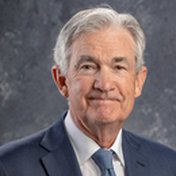 Jerome H. Powell
May 1, 2019 FOMC Statement
FOMC statement
Federal Reserve issues FOMC statement
For release at 2:00 p.m. EDT
Information received since the Federal Open Market Committee met in January March indicates that the labor market remains strong but and that growth of economic activity has slowed from its rose at a solid rate in the fourth quarter. Payroll employment was little changed in February, but job rate. Job gains have been solid, on average, in recent months, and the unemployment rate has remained low. Recent indicators point to slower growth Growth of household spending and business fixed investment slowed in the first quarter. On a 12-month basis, overall inflation has declined, largely as a result of lower energy prices; and inflation for items other than food and energy remains near have declined and are running below 2 percent. On balance, market-based measures of inflation compensation have remained low in recent months, and survey-based measures of longer-term inflation expectations are little changed.
Consistent with its statutory mandate, the Committee seeks to foster maximum employment and price stability. In support of these goals, the Committee decided to maintain the target range for the federal funds rate at 2-1/4 to 2-1/2 percent. The Committee continues to view sustained expansion of economic activity, strong labor market conditions, and inflation near the Committee's symmetric 2 percent objective as the most likely outcomes. In light of global economic and financial developments and muted inflation pressures, the Committee will be patient as it determines what future adjustments to the target range for the federal funds rate may be appropriate to support these outcomes.
In determining the timing and size of future adjustments to the target range for the federal funds rate, the Committee will assess realized and expected economic conditions relative to its maximum employment objective and its symmetric 2 percent inflation objective. This assessment will take into account a wide range of information, including measures of labor market conditions, indicators of inflation pressures and inflation expectations, and readings on financial and international developments.
Voting for the FOMC monetary policy action were: Jerome H. Powell, Chairman; Chair; John C. Williams, Vice Chairman; Chair; Michelle W. Bowman; Lael Brainard; James Bullard; Richard H. Clarida; Charles L. Evans; Esther L. George; Randal K. Quarles; and Eric S. Rosengren.
Implementation Note issued March 20, May 1, 2019
Our summary
What changed
- The FOMC upgraded its assessment of economic activity from 'slowed from its solid rate' to 'rose at a solid rate.'
- It removed the note that February payroll employment was little changed, now stating job gains have been solid on average in recent months.
- It now says both overall inflation and core inflation have declined and are running below 2 percent, whereas previously only overall inflation had declined.
- The statement's voting paragraph now uses 'Chair' and 'Vice Chair' instead of 'Chairman' and 'Vice Chairman.'
Implications
The upgraded economic activity language suggests the FOMC sees the slowdown as temporary, reinforcing its patient stance on rate adjustments.
The explicit acknowledgment that inflation is running below 2 percent may signal increased attention to inflation undershoot, but the unchanged policy language indicates no immediate shift.
Summary generated automatically from the statements. Not investment advice.
Implementation Note
The settings that put the decision into effect: the interest rate paid on reserves, the FOMC's instructions to the New York Fed's trading desk, and the discount rate. Changes are marked the same way as in the statement.
- The Board of Governors of the Federal Reserve System voted unanimously to
maintainset the interest rate paid on required and excess reserve balances at2.402.35 percent, effectiveMarch 21,May 2, 2019. Setting the interest rate paid on required and excess reserve balances 15 basis points below the top of the target range for the federal funds rate is intended to foster trading in the federal funds market at rates well within the FOMC's target range. - As part of its policy decision, the Federal Open Market Committee voted to authorize and direct the Open Market Desk at the Federal Reserve Bank of New York, until instructed otherwise, to execute transactions in the System Open Market Account in accordance with the following domestic policy directive: "Effective
March 21,May 2, 2019, the Federal Open Market Committee directs the Desk to undertake open market operations as necessary to maintain the federal funds rate in a target range of 2-1/4 to 2-1/2 percent, including overnight reverse repurchase operations (and reverse repurchase operations with maturities of more than one day when necessary to accommodate weekend, holiday, or similar trading conventions) at an offering rate of 2.25 percent, in amounts limited only by the value of Treasury securities held outright in the System Open Market Account that are available for such operations and by aper‑counterpartyper-counterparty limit of $30 billion per day.TheEffective May 2, 2019, the Committee directs the Desk tocontinue rollingroll over at auction the amount of principal payments from the Federal Reserve's holdings of Treasury securities maturing during each calendar month that exceeds$30 billion, and$15 billion. The Committee directs the Desk to continue reinvesting in agency mortgage-backed securities the amount of principal payments from the Federal Reserve's holdings of agency debt and agency mortgage-backed securities received during each calendar month that exceeds $20 billion. Small deviations from these amounts for operational reasons are acceptable. The Committee also directs the Desk to engage in dollar roll and coupon swap transactions as necessary to facilitate settlement of the Federal Reserve's agency mortgage-backed securities transactions." - In a related action, the Board of Governors of the Federal Reserve System voted unanimously to approve the establishment of the primary credit rate at the existing level of 3.00 percent.
Press conference
May 1, 2019, 2:30 p.m. ET · Read the transcript
What Powell said that the statement didn't
- The chair said that job gains averaged 180,000 per month in the first quarter, well above the pace needed to absorb new entrants to the labor force.
- The chair said that core inflation ran at or very close to 2 percent from March through December of last year, and that the unexpected first-quarter decline may be due to transitory factors like portfolio management, service prices, and apparel prices.
- The chair said that risks from global growth, Brexit, and trade negotiations have moderated somewhat, citing improved data from China and Europe and reports of progress in U.S.-China trade talks.
- The chair said that the FOMC had a preliminary discussion about the longer-run maturity composition of the balance sheet, with plans to return to the question toward the end of the year, and that any decisions would be implemented with considerable advance notice.
- The chair said that financial stability vulnerabilities are moderate on balance, with some concerns about nonfinancial corporate debt, but that the financial system is resilient with high capital and liquidity.
Summary generated automatically from the transcript and the statement.