March 20, 2019
January 30, 2019
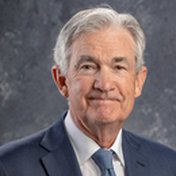 Jerome H. Powell
March 20, 2019 FOMC Statement
FOMC statement
Federal Reserve issues FOMC statement
For release at 2:00 p.m. EST EDT
Information received since the Federal Open Market Committee met in December January indicates that the labor market has continued to strengthen and remains strong but that growth of economic activity has been rising at a slowed from its solid rate. Job rate in the fourth quarter. Payroll employment was little changed in February, but job gains have been strong, solid, on average, in recent months, and the unemployment rate has remained low. Household spending has continued Recent indicators point to grow strongly, while slower growth of household spending and business fixed investment has moderated from its rapid pace earlier last year. in the first quarter. On a 12-month basis, both overall inflation and has declined, largely as a result of lower energy prices; inflation for items other than food and energy remain remains near 2 percent. Although On balance, market-based measures of inflation compensation have moved lower remained low in recent months, and survey-based measures of longer-term inflation expectations are little changed.
Consistent with its statutory mandate, the Committee seeks to foster maximum employment and price stability. In support of these goals, the Committee decided to maintain the target range for the federal funds rate at 2-1/4 to 2-1/2 percent. The Committee continues to view sustained expansion of economic activity, strong labor market conditions, and inflation near the Committee's symmetric 2 percent objective as the most likely outcomes. In light of global economic and financial developments and muted inflation pressures, the Committee will be patient as it determines what future adjustments to the target range for the federal funds rate may be appropriate to support these outcomes.
In determining the timing and size of future adjustments to the target range for the federal funds rate, the Committee will assess realized and expected economic conditions relative to its maximum employment objective and its symmetric 2 percent inflation objective. This assessment will take into account a wide range of information, including measures of labor market conditions, indicators of inflation pressures and inflation expectations, and readings on financial and international developments.
Voting for the FOMC monetary policy action were: Jerome H. Powell, Chairman; John C. Williams, Vice Chairman; Michelle W. Bowman; Lael Brainard; James Bullard; Richard H. Clarida; Charles L. Evans; Esther L. George; Randal K. Quarles; and Eric S. Rosengren.
Implementation Note issued January 30, March 20, 2019
Our summary
What changed
- The FOMC noted that economic activity growth has slowed from its solid fourth-quarter pace, with household spending and business fixed investment growing more slowly in the first quarter.
- It observed that payroll employment was little changed in February, though job gains have been solid on average in recent months and the unemployment rate remains low.
- The statement said overall inflation has declined over the past 12 months, mainly due to lower energy prices, while core inflation remains near 2 percent.
- Market-based inflation compensation measures have remained low in recent months, and survey-based longer-term expectations are little changed.
- The target range for the federal funds rate was maintained at 2-1/4 to 2-1/2 percent, and the vote was unanimous.
Implications
The downgrade in the economic outlook, particularly the slowdown in growth and the dip in inflation, reinforces the FOMC's patient stance on future rate adjustments.
Markets may interpret the softer language as signaling that the next policy move is more likely to be a cut than a hike, though the statement itself offers no explicit guidance.
Summary generated automatically from the statements. Not investment advice.
Projections
| 2019 | 2020 | 2021 | Longer run | |
|---|---|---|---|---|
| Real GDP growth | 2.1 was 2.3 | 1.9 was 2.0 | 1.8 | 1.9 |
| Unemployment rate | 3.7 was 3.5 | 3.8 was 3.6 | 3.9 was 3.8 | 4.3 was 4.4 |
| PCE inflation | 1.8 was 1.9 | 2.0 was 2.1 | 2.0 was 2.1 | 2.0 |
| Core PCE inflation | 2.0 | 2.0 | 2.0 | |
| Federal funds rate | 2.4 was 2.9 | 2.6 was 3.1 | 2.6 was 3.1 | 2.8 |
Median projections of FOMC participants; previous: December.
Each dot is one participant's projection of the federal funds rate (%) at the end of each year and in the longer run.
March December median December median
Scroll the chart sideways for the later years.
Implementation Note
The settings that put the decision into effect: the interest rate paid on reserves, the FOMC's instructions to the New York Fed's trading desk, and the discount rate. Changes are marked the same way as in the statement.
- The Board of Governors of the Federal Reserve System voted unanimously to maintain the interest rate paid on required and excess reserve balances at 2.40 percent, effective
January 31,March 21, 2019. - As part of its policy decision, the Federal Open Market Committee voted to authorize and direct the Open Market Desk at the Federal Reserve Bank of New York, until instructed otherwise, to execute transactions in the System Open Market Account in accordance with the following domestic policy directive: "Effective
January 31,March 21, 2019, the Federal Open Market Committee directs the Desk to undertake open market operations as necessary to maintain the federal funds rate in a target range of 2-1/4 to 2-1/2 percent, including overnight reverse repurchase operations (and reverse repurchase operations with maturities of more than one day when necessary to accommodate weekend, holiday, or similar trading conventions) at an offering rate of 2.25 percent, in amounts limited only by the value of Treasury securities held outright in the System Open Market Account that are available for such operations and by aper counterpartyper‑counterparty limit of $30 billion per day. The Committee directs the Desk to continue rolling over at auction the amount of principal payments from the Federal Reserve's holdings of Treasury securities maturing during each calendar month that exceeds $30 billion, and to continue reinvesting in agency mortgage-backed securities the amount of principal payments from the Federal Reserve's holdings of agency debt and agency mortgage-backed securities received during each calendar month that exceeds $20 billion. Small deviations from these amounts for operational reasons are acceptable. The Committee also directs the Desk to engage in dollar roll and coupon swap transactions as necessary to facilitate settlement of the Federal Reserve's agency mortgage-backed securities transactions." - In a related action, the Board of Governors of the Federal Reserve System voted unanimously to approve the establishment of the primary credit rate at the existing level of 3.00 percent.
Press conference
March 20, 2019, 2:30 p.m. ET · Read the transcript
What Powell said that the statement didn't
- The chair said the U.S. economy is in a good place and that the current policy stance is appropriate.
- The chair said the federal funds rate is in the broad range of estimates of neutral, the rate that tends neither to stimulate nor to restrain the economy.
- The chair said the FOMC intends to slow the runoff of its asset holdings starting in May and to cease runoff entirely in September of this year.
- The chair said the balance sheet plan is not a form of monetary tightening, as the interest rate tool remains the principal tool of monetary policy.
- The chair said the global economy was a tailwind for the U.S. in 2017 but has since slowed, with the European economy slowing substantially and the Chinese economy also slowing, though less.
Summary generated automatically from the transcript and the statement.