March 22, 2023
February 01, 2023
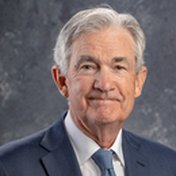 Jerome H. Powell
March 22, 2023 FOMC Statement
FOMC statement
Federal Reserve issues FOMC statement
For release at 2:00 p.m. EST EDT
Recent indicators point to modest growth in spending and production. Job gains have been robust picked up in recent months, months and are running at a robust pace; the unemployment rate has remained low. Inflation has eased somewhat but remains elevated.
The U.S. banking system is sound and resilient. Recent developments are likely to result in tighter credit conditions for households and businesses and to weigh on economic activity, hiring, and inflation. The extent of these effects is uncertain. The Committee remains highly attentive to inflation risks.
The Committee seeks to achieve maximum employment and inflation at the rate of 2 percent over the longer run. In support of these goals, the Committee decided to raise the target range for the federal funds rate to 4-1/2 to 4-3/4 to 5 percent. The Committee will closely monitor incoming information and assess the implications for monetary policy. The Committee anticipates that ongoing increases in the target range will some additional policy firming may be appropriate in order to attain a stance of monetary policy that is sufficiently restrictive to return inflation to 2 percent over time. In determining the extent of future increases in the target range, the Committee will take into account the cumulative tightening of monetary policy, the lags with which monetary policy affects economic activity and inflation, and economic and financial developments. In addition, the Committee will continue reducing its holdings of Treasury securities and agency debt and agency mortgage-backed securities, as described in its previously announced plans. The Committee is strongly committed to returning inflation to its 2 percent objective.
In assessing the appropriate stance of monetary policy, the Committee will continue to monitor the implications of incoming information for the economic outlook. The Committee would be prepared to adjust the stance of monetary policy as appropriate if risks emerge that could impede the attainment of the Committee's goals. The Committee's assessments will take into account a wide range of information, including readings on labor market conditions, inflation pressures and inflation expectations, and financial and international developments.
Voting for the monetary policy action were Jerome H. Powell, Chair; John C. Williams, Vice Chair; Michael S. Barr; Michelle W. Bowman; Lael Brainard; Lisa D. Cook; Austan D. Goolsbee; Patrick Harker; Philip N. Jefferson; Neel Kashkari; Lorie K. Logan; and Christopher J. Waller.
For media inquiries, please email [email protected] or call 202-452-2955.
Implementation Note issued February 1, March 22, 2023
Russia's war against Ukraine is causing tremendous human and economic hardship and is contributing to elevated global uncertainty. The Committee is highly attentive to inflation risks.
Our summary
What changed
- Raised the federal funds rate target range to 4-3/4 to 5 percent, up from 4-1/2 to 4-3/4 percent.
- Changed forward guidance from 'ongoing increases' to 'some additional policy firming may be appropriate'.
- Added language stating the U.S. banking system is sound and resilient, and that recent developments may tighten credit conditions.
- Removed the reference to Russia's war against Ukraine and its contribution to global uncertainty.
- Revised labor market description to note job gains have picked up and are running at a robust pace.
Implications
The shift to 'some additional policy firming' suggests a more conditional and possibly slower pace of future rate hikes, reflecting uncertainty about credit conditions.
The new banking system language signals the FOMC is weighing financial stability risks, which could temper the aggressiveness of future tightening.
Removing the war reference and emphasizing credit effects indicates a pivot in the FOMC's risk assessment toward domestic financial developments.
Summary generated automatically from the statements. Not investment advice.
Projections
| 2023 | 2024 | 2025 | Longer run | |
|---|---|---|---|---|
| Real GDP growth | 0.4 was 0.5 | 1.2 was 1.6 | 1.9 was 1.8 | 1.8 |
| Unemployment rate | 4.5 was 4.6 | 4.6 | 4.6 was 4.5 | 4.0 |
| PCE inflation | 3.3 was 3.1 | 2.5 | 2.1 | 2.0 |
| Core PCE inflation | 3.6 was 3.5 | 2.6 was 2.5 | 2.1 | |
| Federal funds rate | 5.1 | 4.3 was 4.1 | 3.1 | 2.5 |
Median projections of FOMC participants; previous: December.
Each dot is one participant's projection of the federal funds rate (%) at the end of each year and in the longer run.
March December median December median
Scroll the chart sideways for the later years.
Implementation Note
The settings that put the decision into effect: the interest rate paid on reserves, the FOMC's instructions to the New York Fed's trading desk, and the discount rate. Changes are marked the same way as in the statement.
- The Board of Governors of the Federal Reserve System voted unanimously to raise the interest rate paid on reserve balances to
4.654.9 percent, effectiveFebruary 2,March 23, 2023. - As part of its policy decision, the Federal Open Market Committee voted to
authorize anddirect the Open Market Desk at the Federal Reserve Bank of New York, until instructed otherwise, to execute transactions in the System Open Market Account in accordance with the following domestic policy directive: "EffectiveFebruary 2,March 23, 2023, the Federal Open Market Committee directs the Desk to: - Undertake open market operations as necessary to maintain the federal funds rate in a target range of
4-1/2 to4-3/4 to 5 percent. - Conduct standing overnight repurchase agreement operations with a minimum bid rate of
4.755 percent and with an aggregate operation limit of $500billion; the aggregate operation limit can be temporarily increased at the discretion of the Chair.billion. - Conduct standing overnight reverse repurchase agreement operations at an offering rate of
4.554.8 percent and with a per-counterparty limit of $160 billion perday; the per-counterparty limit can be temporarily increased at the discretion of the Chair.day. - Roll over at auction the amount of principal payments from the Federal Reserve's holdings of Treasury securities maturing in each calendar month that exceeds a cap of $60 billion per month. Redeem Treasury coupon securities up to this monthly cap and Treasury bills to the extent that coupon principal payments are less than the monthly cap.
- Reinvest into agency mortgage-backed securities (MBS) the amount of principal payments from the Federal Reserve's holdings of agency debt and agency MBS received in each calendar month that exceeds a cap of $35 billion per month.
- Allow modest deviations from stated amounts for reinvestments, if needed for operational reasons.
- Engage in dollar roll and coupon swap transactions as necessary to facilitate settlement of the Federal Reserve's agency MBS transactions."
- In a related action, the Board of Governors of the Federal Reserve System voted unanimously to approve a 1/4 percentage point increase in the primary credit rate to
4.755 percent, effectiveFebruary 2,March 23, 2023. In taking this action, the Board approved requests to establish that rate submitted by the Boards of Directors of the Federal Reserve Banks of Boston, New York, Philadelphia, Richmond, Atlanta,Chicago,Kansas City, Dallas, and San Francisco.
Press conference
March 22, 2023, 2:30 p.m. ET · Read the transcript
What Powell said that the statement didn't
- The chair said the Federal Reserve, Treasury, and FDIC took decisive actions to protect the U.S. economy and strengthen public confidence in the banking system, including creating the Bank Term Funding Program.
- The chair said deposit flows in the banking system have stabilized over the last week.
- The chair said the decision to raise rates by 25 basis points was supported by a very strong consensus, and that a pause was considered in the days running up to the meeting.
- The chair said the median projection for the federal funds rate is 5.1 percent at the end of this year, 4.3 percent at the end of 2024, and 3.1 percent at the end of 2025, little changed from December.
- The chair said the systemic risk exception to protect uninsured depositors at two banks was invoked due to the risk of contagion to other banks and financial markets, not about those specific banks.
Summary generated automatically from the transcript and the statement.