July 27, 2022
June 15, 2022
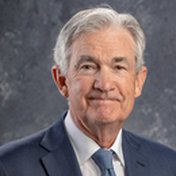 Jerome H. Powell
July 27, 2022 FOMC Statement
FOMC statement
Federal Reserve issues FOMC statement
For release at 2:00 p.m. EDT
Overall economic activity appears to Recent indicators of spending and production have picked up after edging down in the first quarter. Job softened. Nonetheless, job gains have been robust in recent months, and the unemployment rate has remained low. Inflation remains elevated, reflecting supply and demand imbalances related to the pandemic, higher food and energy prices, and broader price pressures.
The invasion of Russia's war against Ukraine by Russia is causing tremendous human and economic hardship. The invasion war and related events are creating additional upward pressure on inflation and are weighing on global economic activity. In addition, COVID-related lockdowns in China are likely to exacerbate supply chain disruptions. The Committee is highly attentive to inflation risks.
The Committee seeks to achieve maximum employment and inflation at the rate of 2 percent over the longer run. In support of these goals, the Committee decided to raise the target range for the federal funds rate to 1‑1/2 2-1/4 to 1-3/4 2-1/2 percent and anticipates that ongoing increases in the target range will be appropriate. In addition, the Committee will continue reducing its holdings of Treasury securities and agency debt and agency mortgage-backed securities, as described in the Plans for Reducing the Size of the Federal Reserve's Balance Sheet that were issued in May. The Committee is strongly committed to returning inflation to its 2 percent objective.
In assessing the appropriate stance of monetary policy, the Committee will continue to monitor the implications of incoming information for the economic outlook. The Committee would be prepared to adjust the stance of monetary policy as appropriate if risks emerge that could impede the attainment of the Committee's goals. The Committee's assessments will take into account a wide range of information, including readings on public health, labor market conditions, inflation pressures and inflation expectations, and financial and international developments.
Voting for the monetary policy action were Jerome H. Powell, Chair; John C. Williams, Vice Chair; Michael S. Barr; Michelle W. Bowman; Lael Brainard; James Bullard; Susan M. Collins; Lisa D. Cook; Patrick Harker; Esther L. George; Philip N. Jefferson; Loretta J. Mester; and Christopher J. Waller. Voting against this action was Esther L. George, who preferred at this meeting to raise the target range for the federal funds rate by 0.5 percentage point to 1-1/4 percent to 1-1/2 percent. Patrick Harker voted as an alternate member at this meeting.
Implementation Note issued June 15, July 27, 2022
Our summary
What changed
- Raised the federal funds rate target range to 2-1/4 to 2-1/2 percent, up from 1-1/2 to 1-3/4 percent.
- Changed economic assessment from 'picked up' to 'softened' in spending and production, while noting robust job gains.
- Replaced 'COVID-related lockdowns in China' with 'higher food and energy prices' as inflation drivers.
- Removed the dissent by Esther George and the alternate member note for Patrick Harker; the vote was unanimous.
- Updated language on Russia's invasion from 'invasion of Ukraine' to 'war against Ukraine'.
Implications
The softened economic language suggests the FOMC sees weaker growth momentum, but the unanimous rate hike signals continued priority on inflation control.
Dropping the China lockdown reference and emphasizing food and energy prices indicates a shift in supply-side concerns, potentially affecting future policy communication.
The unanimous vote may reduce market speculation about internal disagreement, reinforcing a unified stance on ongoing rate increases.
Summary generated automatically from the statements. Not investment advice.
Implementation Note
The settings that put the decision into effect: the interest rate paid on reserves, the FOMC's instructions to the New York Fed's trading desk, and the discount rate. Changes are marked the same way as in the statement.
- The Board of Governors of the Federal Reserve System voted unanimously to raise the interest rate paid on reserve balances to
1.652.4 percent, effectiveJune 16,July 28, 2022. - As part of its policy decision, the Federal Open Market Committee voted to authorize and direct the Open Market Desk at the Federal Reserve Bank of New York, until instructed otherwise, to execute transactions in the System Open Market Account in accordance with the following domestic policy directive: "Effective
June 16,July 28, 2022, the Federal Open Market Committee directs the Desk to: - Undertake open market operations as necessary to maintain the federal funds rate in a target range of
1-1/22-1/4 to1-3/42-1/2 percent. - Conduct overnight repurchase agreement operations with a minimum bid rate of
1.752.5 percent and with an aggregate operation limit of $500 billion; the aggregate operation limit can be temporarily increased at the discretion of the Chair. - Conduct overnight reverse repurchase agreement operations at an offering rate of
1.552.3 percent and with a per-counterparty limit of $160 billion per day; the per-counterparty limit can be temporarily increased at the discretion of the Chair. - Roll over at auction the amount of principal payments from the Federal Reserve's holdings of Treasury securities maturing in the calendar months of
June andJuly and August that exceeds a cap of $30 billion per month. Redeem Treasury coupon securities up to this monthly cap and Treasury bills to the extent that coupon principal payments are less than the monthly cap. - Starting in the calendar month of September, roll over at auction the amount of principal payments from the Federal Reserve's holdings of Treasury securities maturing in each calendar month that exceeds a cap of $60 billion per month. Redeem Treasury coupon securities up to this monthly cap and Treasury bills to the extent that coupon principal payments are less than the monthly cap.
- Reinvest into agency mortgage-backed securities (MBS) the amount of principal payments from the Federal Reserve's holdings of agency debt and agency MBS received in the calendar months of
June andJuly and August that exceeds a cap of $17.5 billion per month. - Starting in the calendar month of September, reinvest into agency MBS the amount of principal payments from the Federal Reserve's holdings of agency debt and agency MBS received in each calendar month that exceeds a cap of $35 billion per month.
- Allow modest deviations from stated amounts for reinvestments, if needed for operational reasons.
- Engage in dollar roll and coupon swap transactions as necessary to facilitate settlement of the Federal Reserve's agency MBS transactions."
- In a related action, the Board of Governors of the Federal Reserve System voted unanimously to approve a 3/4 percentage point increase in the primary credit rate to
1.752.5 percent, effectiveJune 16,July 28, 2022. In taking this action, the Board approvedthe requestrequests to establish that rate submitted by theBoardBoards of Directors of the Federal ReserveBankBanks ofMinneapolis.Boston, New York, Philadelphia, Cleveland, Richmond, Atlanta, Chicago, Dallas, and San Francisco.
Press conference
July 27, 2022, 2:30 p.m. ET · Read the transcript
What Powell said that the statement didn't
- The chair said the FOMC considered a full percentage point increase but decided on 75 basis points, with broad support for the move.
- The chair stated that the federal funds rate is now in the range of neutral, and the FOMC aims to reach a moderately restrictive level by the end of the year, citing the June SEP median of 3¼ to 3½ percent.
- The chair noted that the labor market is extremely tight, with the unemployment rate near a 50-year low and job vacancies near historical highs, and that employment rose by an average of 375,000 jobs per month over the past three months.
- The chair said that the full effects of the large and rapid rate hikes have likely not yet been felt by the economy, and there is probably significant additional tightening in the pipeline.
- The chair acknowledged that the path to bringing down inflation while sustaining a strong labor market has narrowed, and that a period of below-trend growth and some softening in labor market conditions is likely necessary to restore price stability.
Summary generated automatically from the transcript and the statement.