March 16, 2022
January 26, 2022
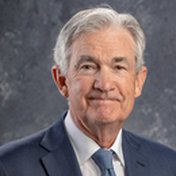 Jerome H. Powell
March 16, 2022 FOMC Statement
FOMC statement
Federal Reserve issues FOMC statement
For release at 2:00 p.m. EST EDT
Indicators of economic activity and employment have continued to strengthen. Job gains have been strong in recent months, and the unemployment rate has declined substantially. Inflation remains elevated, reflecting supply and demand imbalances related to the pandemic, higher energy prices, and broader price pressures.
The invasion of Ukraine by Russia is causing tremendous human and economic hardship. The implications for the U.S. economy are highly uncertain, but in the near term the invasion and related events are likely to create additional upward pressure on inflation and weigh on economic activity.
The Committee seeks to achieve maximum employment and inflation at the rate of 2 percent over the longer run. With appropriate firming in the stance of monetary policy, the Committee expects inflation to return to its 2 percent objective and the labor market to remain strong. In support of these goals, the Committee decided to keep raise the target range for the federal funds rate at 0 to 1/4 percent. With inflation well above 2 to 1/2 percent and a strong labor market, anticipates that ongoing increases in the Committee expects it will soon be appropriate to raise the target range for will be appropriate. In addition, the federal funds rate. The Committee decided expects to continue to reduce the monthly pace of begin reducing its net asset purchases, bringing them to an end in early March. Beginning in February, the Committee will increase its holdings of Treasury securities by at least $20 billion per month and of agency mortgage‑backed securities by at least $10 billion per month. The Federal Reserve's ongoing purchases debt and holdings of agency mortgage-backed securities will continue to foster smooth market functioning and accommodative financial conditions, thereby supporting the flow of credit to households and businesses. at a coming meeting.
In assessing the appropriate stance of monetary policy, the Committee will continue to monitor the implications of incoming information for the economic outlook. The Committee would be prepared to adjust the stance of monetary policy as appropriate if risks emerge that could impede the attainment of the Committee's goals. The Committee's assessments will take into account a wide range of information, including readings on public health, labor market conditions, inflation pressures and inflation expectations, and financial and international developments.
Voting for the monetary policy action were Jerome H. Powell, Chair; John C. Williams, Vice Chair; Michelle W. Bowman; Lael Brainard; James Bullard; Esther L. George; Patrick Harker; Loretta J. Mester; and Christopher J. Waller. Voting against this action was James Bullard, who preferred at this meeting to raise the target range for the federal funds rate by 0.5 percentage point to 1/2 to 3/4 percent. Patrick Harker voted as an alternate member at this meeting.
Implementation Note issued January 26, March 16, 2022
Indicators of economic activity and employment have continued to strengthen. The sectors most adversely affected by the pandemic have improved in recent months but are being affected by the recent sharp rise in COVID-19 cases. Job gains have been solid in recent months, and the unemployment rate has declined substantially. Supply and demand imbalances related to the pandemic and the reopening of the economy have continued to contribute to elevated levels of inflation. Overall financial conditions remain accommodative, in part reflecting policy measures to support the economy and the flow of credit to U.S. households and businesses.
The path of the economy continues to depend on the course of the virus. Progress on vaccinations and an easing of supply constraints are expected to support continued gains in economic activity and employment as well as a reduction in inflation. Risks to the economic outlook remain, including from new variants of the virus.
Our summary
What changed
- Raised the federal funds rate target range to 1/4 to 1/2 percent, up from 0 to 1/4 percent, and signaled ongoing increases will be appropriate.
- Announced plans to begin reducing holdings of Treasury securities and agency debt and mortgage-backed securities at a coming meeting, replacing the prior asset purchase taper schedule.
- Replaced pandemic-specific language with a new reference to Russia's invasion of Ukraine, citing likely upward pressure on inflation and a drag on economic activity.
- Noted inflation reflects higher energy prices and broader price pressures, in addition to pandemic-related supply and demand imbalances.
- Recorded a dissent from James Bullard, who preferred a 0.5 percentage point hike to 1/2 to 3/4 percent; the prior statement was unanimous.
Implications
The shift from 'soon be appropriate' to an actual hike and 'ongoing increases' signals a firm commitment to tightening, with balance sheet runoff now explicitly on the horizon.
The Ukraine reference introduces a new source of uncertainty, suggesting the FOMC sees near-term inflation risks as elevated but may weigh economic activity impacts in future decisions.
The dissent highlights internal disagreement over the pace of tightening, which markets may interpret as a sign of potential for faster rate hikes if inflation persists.
Summary generated automatically from the statements. Not investment advice.
Projections
| 2022 | 2023 | 2024 | Longer run | |
|---|---|---|---|---|
| Real GDP growth | 2.8 was 4.0 | 2.2 | 2.0 | 1.8 |
| Unemployment rate | 3.5 | 3.5 | 3.6 was 3.5 | 4.0 |
| PCE inflation | 4.3 was 2.6 | 2.7 was 2.3 | 2.3 was 2.1 | 2.0 |
| Core PCE inflation | 4.1 was 2.7 | 2.6 was 2.3 | 2.3 was 2.1 | |
| Federal funds rate | 1.9 was 0.9 | 2.8 was 1.6 | 2.8 was 2.1 | 2.4 was 2.5 |
Median projections of FOMC participants; previous: December.
Each dot is one participant's projection of the federal funds rate (%) at the end of each year and in the longer run.
March December median December median
Scroll the chart sideways for the later years.
Implementation Note
The settings that put the decision into effect: the interest rate paid on reserves, the FOMC's instructions to the New York Fed's trading desk, and the discount rate. Changes are marked the same way as in the statement.
- The Board of Governors of the Federal Reserve System voted unanimously to
maintainraise the interest rate paid on reserve balancesat 0.15to 0.4 percent, effectiveJanuary 27,March 17, 2022. - As part of its policy decision, the Federal Open Market Committee voted to authorize and direct the Open Market Desk at the Federal Reserve Bank of New York, until instructed otherwise, to execute transactions in the System Open Market Account in accordance with the following domestic policy directive: "Effective
January 27,March 17, 2022, the Federal Open Market Committee directs the Desk to: - Undertake open market operations as necessary to maintain the federal funds rate in a target range of
0 to1/4 to 1/2 percent. - Conduct overnight repurchase agreement operations with a minimum bid rate of
0.250.5 percent and with an aggregate operation limit of $500 billion; the aggregate operation limit can be temporarily increased at the discretion of the Chair. - Conduct overnight reverse repurchase agreement operations at an offering rate of
0.050.3 percent and with a per-counterparty limit of $160 billion per day; the per-counterparty limit can be temporarily increased at the discretion of the Chair. - Roll over at auction all principal payments from the Federal Reserve's holdings of Treasury securities and reinvest all principal payments from the Federal Reserve's holdings of agency debt and agency
MBSmortgage-backed securities (MBS) in agency MBS. - Allow modest deviations from stated amounts for
purchases andreinvestments, if needed for operational reasons. - Engage in dollar roll and coupon swap transactions as necessary to facilitate settlement of the Federal Reserve's agency MBS transactions."
- In a related action, the Board of Governors of the Federal Reserve System voted unanimously to approve a 1/4 percentage point increase in the
establishment of theprimary credit rateatto 0.5 percent, effective March 17, 2022. In taking this action, theexisting levelBoard approved requests to establish that rate submitted by the Boards of0.25 percent.Directors of the Federal Reserve Banks of Boston, Philadelphia, Cleveland, Richmond, Atlanta, Chicago, St. Louis, Minneapolis, Kansas City, and San Francisco. Complete the increase in System Open Market Account (SOMA) holdings of Treasury securities by $40 billion and of agency mortgage-backed securities (MBS) by $20 billion, as indicated in the monthly purchase plans released in mid-January.Increase the SOMA holdings of Treasury securities by $20 billion and of agency MBS by $10 billion, during the monthly purchase period beginning in mid-February.Increase holdings of Treasury securities and agency MBS by additional amounts as needed to sustain smooth functioning of markets for these securities.
Press conference
March 16, 2022, 2:30 p.m. ET · Read the transcript
What Powell said that the statement didn't
- The chair said the probability of a recession within the next year is not particularly elevated, citing strong aggregate demand and labor market conditions.
- The chair stated that the median projection for real GDP growth is 2.8 percent this year, 2.2 percent next year, and 2 percent in 2024.
- The chair noted that the median projection for the federal funds rate is 1.9 percent at the end of this year and 2.8 percent over the following two years, higher than the longer-run estimate.
- The chair said inflation is expected to begin coming down in the second half of the year, with the median projection at 4.3 percent this year, falling to 2.7 percent next year and 2.3 percent in 2024.
- The chair mentioned that the FOMC made good progress on a plan for reducing securities holdings and expects to announce the beginning of balance sheet reduction at a coming meeting.
Summary generated automatically from the transcript and the statement.