September 16, 2020
July 29, 2020
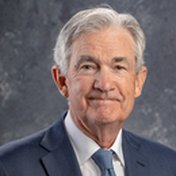 Jerome H. Powell
September 16, 2020 FOMC Statement
FOMC statement
Federal Reserve issues FOMC statement
For release at 2:00 p.m. EDT
The Federal Reserve is committed to using its full range of tools to support the U.S. economy in this challenging time, thereby promoting its maximum employment and price stability goals.
The coronavirus outbreak COVID-19 pandemic is causing tremendous human and economic hardship across the United States and around the world. Following sharp declines, economic Economic activity and employment have picked up somewhat in recent months but remain well below their levels at the beginning of the year. Weaker demand and significantly lower oil prices are holding down consumer price inflation. Overall financial conditions have improved in recent months, in part reflecting policy measures to support the economy and the flow of credit to U.S. households and businesses.
The path of the economy will depend significantly on the course of the virus. The ongoing public health crisis will continue to weigh heavily on economic activity, employment, and inflation in the near term, and poses considerable risks to the economic outlook over the medium term. In light of these developments, the Committee decided to maintain the target range for the federal funds rate at 0 to 1/4 percent. The Committee expects to maintain this target range until it is confident that the economy has weathered recent events and is on track to achieve its maximum employment and price stability goals.
The Committee seeks to achieve maximum employment and inflation at the rate of 2 percent over the longer run. With inflation running persistently below this longer-run goal, the Committee will aim to achieve inflation moderately above 2 percent for some time so that inflation averages 2 percent over time and longer-term inflation expectations remain well anchored at 2 percent. The Committee expects to maintain an accommodative stance of monetary policy until these outcomes are achieved. The Committee decided to keep the target range for the federal funds rate at 0 to 1/4 percent and expects it will be appropriate to maintain this target range until labor market conditions have reached levels consistent with the Committee's assessments of maximum employment and inflation has risen to 2 percent and is on track to moderately exceed 2 percent for some time. In addition, over coming months the Federal Reserve will increase its holdings of Treasury securities and agency mortgage-backed securities at least at the current pace to sustain smooth market functioning and help foster accommodative financial conditions, thereby supporting the flow of credit to households and businesses.
The In assessing the appropriate stance of monetary policy, the Committee will continue to monitor the implications of incoming information for the economic outlook, including information related outlook. The Committee would be prepared to public health, as well as global developments and muted inflation pressures, and will use its tools and act as appropriate to support adjust the economy. In determining the timing and size of future adjustments to the stance of monetary policy, policy as appropriate if risks emerge that could impede the Committee attainment of the Committee's goals. The Committee's assessments will assess realized and expected economic conditions relative to its maximum employment objective and its symmetric 2 percent inflation objective. This assessment will take into account a wide range of information, including measures of readings on public health, labor market conditions, indicators of inflation pressures and inflation expectations, and readings on financial and international developments.
Voting for the monetary policy action were Jerome H. Powell, Chair; John C. Williams, Vice Chair; Michelle W. Bowman; Lael Brainard; Richard H. Clarida; Patrick Harker; Robert S. Kaplan; Neel Kashkari; Loretta J. Mester; and Randal K. Quarles.
Voting against the action were Robert S. Kaplan, who expects that it will be appropriate to maintain the current target range until the Committee is confident that the economy has weathered recent events and is on track to achieve its maximum employment and price stability goals as articulated in its new policy strategy statement, but prefers that the Committee retain greater policy rate flexibility beyond that point; and Neel Kashkari, who prefers that the Committee indicate that it expects to maintain the current target range until core inflation has reached 2 percent on a sustained basis.
Implementation Note issued July 29, September 16, 2020
To support the flow of credit to households and businesses, over coming months the Federal Reserve will increase its holdings of Treasury securities and agency residential and commercial mortgage-backed securities at least at the current pace to sustain smooth market functioning, thereby fostering effective transmission of monetary policy to broader financial conditions. In addition, the Open Market Desk will continue to offer large-scale overnight and term repurchase agreement operations. The Committee will closely monitor developments and is prepared to adjust its plans as appropriate.
Our summary
What changed
- The FOMC adopted a new policy framework aiming for inflation moderately above 2 percent for some time to average 2 percent over time, replacing the prior symmetric 2 percent objective.
- The rate guidance now conditions on labor market conditions reaching maximum employment and inflation rising to 2 percent and on track to moderately exceed it, instead of confidence in weathering recent events.
- The balance sheet language now mentions increasing holdings of Treasury securities and agency mortgage-backed securities, dropping the reference to agency commercial mortgage-backed securities and the repurchase agreement operations.
- The statement removed the sentence about closely monitoring developments and being prepared to adjust plans, replacing it with a broader commitment to adjust policy if risks impede goals.
- The vote was split, with Robert S. Kaplan and Neel Kashkari dissenting, each preferring different rate guidance flexibility or a core inflation threshold.
Implications
The new forward guidance signals a more accommodative stance, with a commitment to keep rates low until inflation overshoots 2 percent, suggesting a longer period of easy policy.
The removal of the repurchase agreement operations and the narrowed asset purchase language may indicate a shift toward focusing on balance sheet expansion for accommodation rather than market functioning.
The dissents highlight internal disagreement over the flexibility of the new framework, which could lead to market speculation about future policy adjustments.
Summary generated automatically from the statements. Not investment advice.
Projections
| 2020 | 2021 | 2022 | 2023 | Longer run | |
|---|---|---|---|---|---|
| Real GDP growth | -3.7 was -6.5 | 4.0 was 5.0 | 3.0 was 3.5 | 2.5 | 1.9 was 1.8 |
| Unemployment rate | 7.6 was 9.3 | 5.5 was 6.5 | 4.6 was 5.5 | 4.0 | 4.1 |
| PCE inflation | 1.2 was 0.8 | 1.7 was 1.6 | 1.8 was 1.7 | 2.0 | 2.0 |
| Core PCE inflation | 1.5 was 1.0 | 1.7 was 1.5 | 1.8 was 1.7 | 2.0 | |
| Federal funds rate | 0.1 | 0.1 | 0.1 | 0.1 | 2.5 |
Median projections of FOMC participants; previous: June.
Each dot is one participant's projection of the federal funds rate (%) at the end of each year and in the longer run.
September June median June median
Scroll the chart sideways for the later years.
Implementation Note
The settings that put the decision into effect: the interest rate paid on reserves, the FOMC's instructions to the New York Fed's trading desk, and the discount rate. Changes are marked the same way as in the statement.
- The Board of Governors of the Federal Reserve System voted unanimously to maintain the interest rate paid on required and excess reserve balances at 0.10 percent, effective
July 30,September 17, 2020. - As part of its policy decision, the Federal Open Market Committee voted to authorize and direct the Open Market Desk at the Federal Reserve Bank of New York, until instructed otherwise, to execute transactions in the System Open Market Account in accordance with the following domestic policy directive: "Effective
July 30,September 17, 2020, the Federal Open Market Committee directs the Desk to: - Undertake open market operations as necessary to maintain the federal funds rate in a target range of 0 to 1/4 percent.
- Increase the System Open Market Account holdings of Treasury
securities,securities and agency mortgage-backed securities(MBS),(MBS) at the current pace. Increase holdings of Treasury securities and agency MBS by additional amounts and purchase agency commercial mortgage-backed securities (CMBS)at least at the current paceas needed to sustain smooth functioning of markets for thesesecurities, thereby fostering effective transmission of monetary policy to broader financial conditions.securities. - Conduct term and overnight repurchase agreement operations to support effective policy implementation and the smooth functioning of short-term U.S. dollar funding markets.
- Conduct overnight reverse repurchase agreement operations at an offering rate of 0.00 percent and with a per-counterparty limit of $30 billion per day; the per-counterparty limit can be temporarily increased at the discretion of the Chair.
- Roll over at auction all principal payments from the Federal Reserve's holdings of Treasury securities and reinvest all principal payments from the Federal Reserve's holdings of agency debt and agency MBS in agency
MBS and all principal payments from holdings of agency CMBS in agency CMBS.MBS. - Allow modest deviations from stated amounts for purchases and reinvestments, if needed for operational reasons.
- Engage in dollar roll and coupon swap transactions as necessary to facilitate settlement of the Federal Reserve's agency MBS transactions."
- In a related action, the Board of Governors of the Federal Reserve System voted unanimously to approve the establishment of the primary credit rate at the existing level of 0.25 percent.
Press conference
September 16, 2020, 2:30 p.m. ET · Read the transcript
What Powell said that the statement didn't
- The chair said household spending has recovered about three-quarters of its earlier decline since the second quarter.
- The chair said roughly half of the 22 million jobs lost in March and April have been regained, with the unemployment rate at 8.4 percent as of August.
- The chair said the median FOMC projection for the unemployment rate is 7.6 percent at the end of this year, 5.5 percent next year, and 4 percent by 2023.
- The chair said the median inflation projection rises from 1.2 percent this year to 1.7 percent next year and reaches 2 percent in 2023.
- The chair said the Federal Reserve’s asset purchases amount to roughly $80 billion a month of Treasuries and $40 billion net per month for mortgage-backed securities.
Summary generated automatically from the transcript and the statement.