March 03, 15, 2020
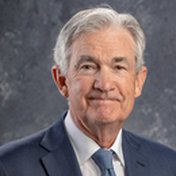 Jerome H. Powell
March 15, 2020 FOMC Statement
FOMC statement
Federal Reserve issues FOMC statement
For release at 5:00 p.m. EDT
For release at 10:00 a.m. EST
The coronavirus outbreak has harmed communities and disrupted economic activity in many countries, including the United States. Global financial conditions have also been significantly affected. Available economic data show that the U.S. economy came into this challenging period on a strong footing. Information received since the Federal Open Market Committee met in January indicates that the labor market remained strong through February and economic activity rose at a moderate rate. Job gains have been solid, on average, in recent months, and the unemployment rate has remained low. Although household spending rose at a moderate pace, business fixed investment and exports remained weak. More recently, the energy sector has come under stress. On a 12‑month basis, overall inflation and inflation for items other than food and energy are running below 2 percent. Market-based measures of inflation compensation have declined; survey-based measures of longer-term inflation expectations are little changed.
Consistent with its statutory mandate, the Committee seeks to foster maximum employment and price stability. The fundamentals effects of the U.S. economy remain strong. However, the coronavirus poses evolving will weigh on economic activity in the near term and pose risks to the economic activity. outlook. In light of these risks and in support of achieving its maximum employment and price stability goals, developments, the Federal Open Market Committee decided today to lower the target range for the federal funds rate by 1/2 percentage point, to 1 0 to 1‑1/4 1/4 percent. The Committee expects to maintain this target range until it is closely monitoring developments and their implications for confident that the economic outlook economy has weathered recent events and will use is on track to achieve its tools maximum employment and act as appropriate to price stability goals. This action will help support economic activity, strong labor market conditions, and inflation returning to the economy. Committee's symmetric 2 percent objective.
The Committee will continue to monitor the implications of incoming information for the economic outlook, including information related to public health, as well as global developments and muted inflation pressures, and will use its tools and act as appropriate to support the economy. In determining the timing and size of future adjustments to the stance of monetary policy, the Committee will assess realized and expected economic conditions relative to its maximum employment objective and its symmetric 2 percent inflation objective. This assessment will take into account a wide range of information, including measures of labor market conditions, indicators of inflation pressures and inflation expectations, and readings on financial and international developments.
The Federal Reserve is prepared to use its full range of tools to support the flow of credit to households and businesses and thereby promote its maximum employment and price stability goals. To support the smooth functioning of markets for Treasury securities and agency mortgage-backed securities that are central to the flow of credit to households and businesses, over coming months the Committee will increase its holdings of Treasury securities by at least $500 billion and its holdings of agency mortgage-backed securities by at least $200 billion. The Committee will also reinvest all principal payments from the Federal Reserve's holdings of agency debt and agency mortgage-backed securities in agency mortgage-backed securities. In addition, the Open Market Desk has recently expanded its overnight and term repurchase agreement operations. The Committee will continue to closely monitor market conditions and is prepared to adjust its plans as appropriate.
Voting for the monetary policy action were Jerome H. Powell, Chair; John C. Williams, Vice Chair; Michelle W. Bowman; Lael Brainard; Richard H. Clarida; Patrick Harker; Robert S. Kaplan; Neel Kashkari; Loretta J. Mester; and Randal K. Quarles. Voting against this action was Loretta J. Mester, who was fully supportive of all of the actions taken to promote the smooth functioning of markets and the flow of credit to households and businesses but preferred to reduce the target range for the federal funds rate to 1/2 to 3/4 percent at this meeting.
In a related set of actions to support the credit needs of households and businesses, the Federal Reserve announced measures related to the discount window, intraday credit, bank capital and liquidity buffers, reserve requirements, and—in coordination with other central banks—the U.S. dollar liquidity swap line arrangements. More information can be found on the Federal Reserve Board's website.
For media inquiries, call 202-452-2955.
Implementation Note issued March 3, 2020
Our summary
What changed
- Cut the federal funds rate target range by a full percentage point to 0 to 1/4 percent, from 1 to 1-1/4 percent.
- Committed to maintain the new range until confident the economy has weathered the coronavirus and is on track for its goals.
- Announced large-scale asset purchases: at least $500 billion in Treasury securities and $200 billion in agency mortgage-backed securities over coming months.
- Expanded overnight and term repurchase agreement operations and announced related measures on the discount window, intraday credit, bank capital and liquidity buffers, reserve requirements, and dollar swap lines.
- Loretta J. Mester dissented, preferring a smaller cut to 1/2 to 3/4 percent, while supporting the other actions.
Implications
The shift from a one-off cut to an explicit forward commitment signals a more aggressive easing stance, with the FOMC prepared to hold rates near zero until recovery is assured.
The new asset purchase program and credit-support measures indicate a move toward quantitative easing and broader liquidity provision, suggesting policy will remain highly accommodative amid heightened uncertainty.
The dissenting preference for a smaller cut highlights internal debate, but the overall language emphasizes readiness to use the full range of tools, which markets may read as a strong commitment to support the economy.
Summary generated automatically from the statements. Not investment advice.
Implementation Note
The settings that put the decision into effect: the interest rate paid on reserves, the FOMC's instructions to the New York Fed's trading desk, and the discount rate. Changes are marked the same way as in the statement.
- The Board of Governors of the Federal Reserve System voted unanimously to set the interest rate paid on required and excess reserve balances at
1.100.10 percent, effective March4,16, 2020. - As part of its policy decision, the Federal Open Market Committee voted to authorize and direct the Open Market Desk at the Federal Reserve Bank of New York, until instructed otherwise, to execute transactions in the System Open Market Account in accordance with the following domestic policy directive: "Effective March
4,16, 2020, the Federal Open Market Committee directs the Desk to undertake open market operations as necessary to maintain the federal funds rate in a target range of10 to1-1/41/4 percent.In light of recent and expected increases in the Federal Reserve's non-reserve liabilities, theThe Committee directs the Desk tocontinue purchasingincrease over coming months the System Open Market Account holdings of Treasurybillssecurities and agency mortgage-backed securities (MBS) by at leastinto$500 billion and by at least $200 billion, respectively. The Committee instructs thesecond quarter of 2020Desk tomaintain over time ample reserve balancesconduct these purchases ator abovea pace appropriate to support thelevel that prevailed in early September 2019.smooth functioning of markets for Treasury securities and agency MBS. The Committee also directs the Desk to continue conducting term and overnight repurchase agreement operationsat least through April 2020to ensure that the supply of reserves remains ampleeven during periods of sharp increases in non-reserve liabilities,and tomitigatesupport therisksmooth functioning ofmoney market pressures that could adversely affect policy implementation.short-term U.S. dollar funding markets. In addition, the Committee directs the Desk to conduct overnight reverse repurchase operations (and reverse repurchase operations with maturities of more than one day when necessary to accommodate weekend, holiday, or similar trading conventions) at an offering rate of1.000.00 percent, in amounts limited only by the value of Treasury securities held outright in the System Open Market Account that are available for such operations and by a per-counterparty limit of $30 billion per day. The Committee directs the Desk to continue rolling over at auction all principal payments from the Federal Reserve's holdings of Treasury securities and tocontinue reinvestingreinvest all principal payments from the Federal Reserve's holdings of agency debt and agency mortgage-backed securities received during each calendarmonth. Principal payments from agency debt and agency mortgage-backed securities up to $20 billion permonthwill continue to be reinvestedinTreasury securities to roughly match the maturity composition of Treasury securities outstanding; principal payments in excess of $20 billion per month will continue to be reinvested inagency mortgage-backed securities. Small deviations from these amounts for operational reasons are acceptable. The Committee also directs the Desk to engage in dollar roll and coupon swap transactions as necessary to facilitate settlement of the Federal Reserve's agency mortgage-backed securitiestransactions."transactions. - In a related action, the Board of Governors of the Federal Reserve System voted unanimously to approve a
1/21-1/2 percentage point decrease in the primary credit rate to1.750.25 percent, effective March4,16, 2020. In taking this action, the Board approved requests to establish that rate submitted by the Boards of Directors of the Federal Reserve Banks of Minneapolis and New York.
Press conference
March 15, 2020, 2:30 p.m. ET · Read the transcript
What Powell said that the statement didn't
- The chair said the second quarter is likely to be weak, with output possibly declining from the first quarter.
- He stated that negative policy rates are not seen as likely to be an appropriate policy response in the United States.
- He acknowledged the Fed lacks tools to directly reach individuals and small businesses facing income drops, calling fiscal policy critical for such relief.
- He said the Fed does not have legal authority to buy securities outside Treasuries and agency mortgage-backed securities and is not seeking it.
- He noted the discount window rate was reduced by 1½ percentage points to ¼ percent, with loans available for up to 90 days.
Summary generated automatically from the transcript and the statement.