August 01, 2018
June 13, 2018
Statement·Presser·Minutes
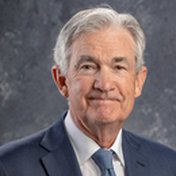 Jerome H. Powell
August 1, 2018 FOMC Statement
FOMC statement
Federal Reserve issues FOMC statement
For release at 2:00 p.m. EDT
Information received since the Federal Open Market Committee met in May June indicates that the labor market has continued to strengthen and that economic activity has been rising at a solid strong rate. Job gains have been strong, on average, in recent months, and the unemployment rate has declined. Recent data suggest that growth of household stayed low. Household spending has picked up, while and business fixed investment has continued to grow have grown strongly. On a 12-month basis, both overall inflation and inflation for items other than food and energy have moved close to remain near 2 percent. Indicators of longer-term inflation expectations are little changed, on balance.
Consistent with its statutory mandate, the Committee seeks to foster maximum employment and price stability. The Committee expects that further gradual increases in the target range for the federal funds rate will be consistent with sustained expansion of economic activity, strong labor market conditions, and inflation near the Committee's symmetric 2 percent objective over the medium term. Risks to the economic outlook appear roughly balanced.
In view of realized and expected labor market conditions and inflation, the Committee decided to raise maintain the target range for the federal funds rate to at 1-3/4 to 2 percent. The stance of monetary policy remains accommodative, thereby supporting strong labor market conditions and a sustained return to 2 percent inflation.
In determining the timing and size of future adjustments to the target range for the federal funds rate, the Committee will assess realized and expected economic conditions relative to its maximum employment objective and its symmetric 2 percent inflation objective. This assessment will take into account a wide range of information, including measures of labor market conditions, indicators of inflation pressures and inflation expectations, and readings on financial and international developments.
Voting for the FOMC monetary policy action were were: Jerome H. Powell, Chairman; William John C. Dudley, Williams, Vice Chairman; Thomas I. Barkin; Raphael W. Bostic; Lael Brainard; Esther L. George; Loretta J. Mester; and Randal K. Quarles; and John C. Williams. Quarles.
Implementation Note issued June 13, August 1, 2018
Our summary
What changed
- The FOMC decided to maintain the target range for the federal funds rate at 1-3/4 to 2 percent, rather than raising it as in June.
- Economic activity is now described as rising at a strong rate, up from a solid rate, and household spending and business fixed investment are said to have grown strongly.
- The unemployment rate is described as having stayed low, whereas previously it had declined.
- Inflation is described as remaining near 2 percent, rather than having moved close to 2 percent.
- The voting membership changed: John C. Williams became Vice Chairman, and Esther L. George joined the voters, while William C. Dudley no longer voted.
Implications
The decision to hold rates steady, despite a stronger economic description, suggests the FOMC is comfortable waiting for more data before further tightening.
The upgraded language on growth and spending, paired with unchanged inflation language, may signal that the next move is still likely gradual but not imminent.
The shift in voting membership, with a new Vice Chairman and a new voter, could alter the balance of views but does not change the stated policy stance.
Summary generated automatically from the statements. Not investment advice.
Implementation Note
The settings that put the decision into effect: the interest rate paid on reserves, the FOMC's instructions to the New York Fed's trading desk, and the discount rate. Changes are marked the same way as in the statement.
- The Board of Governors of the Federal Reserve System voted unanimously to
raisemaintain the interest rate paid on required and excess reserve balancestoat 1.95 percent, effectiveJune 14,August 2, 2018.Setting the interest rate paid on required and excess reserve balances 5 basis points below the top of the target range for the federal funds rate is intended to foster trading in the federal funds market at rates well within the FOMC's target range. - As part of its policy decision, the Federal Open Market Committee voted to authorize and direct the Open Market Desk at the Federal Reserve Bank of New York, until instructed otherwise, to execute transactions in the System Open Market Account in accordance with the following domestic policy directive: "Effective
June 14,August 2, 2018, the Federal Open Market Committee directs the Desk to undertake open market operations as necessary to maintain the federal funds rate in a target range of 1-3/4 to 2 percent, including overnight reverse repurchase operations (and reverse repurchase operations with maturities of more than one day when necessary to accommodate weekend, holiday, or similar trading conventions) at an offering rate of 1.75 percent, in amounts limited only by the value of Treasury securities held outright in the System Open Market Account that are available for such operations and by a per-counterparty limit of $30 billion per day. The Committee directs the Desk to continue rolling over at auction the amount of principal payments from the Federal Reserve's holdings of Treasury securities maturing duringJune that exceeds $18 billion, and to continue reinvesting in agency mortgage-backed securities the amount of principal payments from the Federal Reserve's holdings of agency debt and agency mortgage-backed securities received during June that exceeds $12 billion. Effective in July, the Committee directs the Desk to roll over at auction the amount of principal payments from the Federal Reserve's holdings of Treasury securities maturing duringeach calendar month that exceeds $24 billion, and to reinvest in agency mortgage-backed securities the amount of principal payments from the Federal Reserve's holdings of agency debt and agency mortgage-backed securities received during each calendar month that exceeds $16 billion. Small deviations from these amounts for operational reasons are acceptable. The Committee also directs the Desk to engage in dollar roll and coupon swap transactions as necessary to facilitate settlement of the Federal Reserve's agency mortgage-backed securities transactions." - In a related action, the Board of Governors of the Federal Reserve System voted unanimously to approve the establishment of the primary credit rate at the existing level of 2.50 percent.
In a related action, the Board of Governors of the Federal Reserve System voted unanimously to approve a 1/4 percentage point increase in the primary credit rate to 2.50 percent, effective June 14, 2018. In taking this action, the Board approved requests to establish that rate submitted by the Boards of Directors of the Federal Reserve Banks of Boston, Philadelphia, Cleveland, Richmond, Atlanta, Chicago, St. Louis, Minneapolis, Kansas City, Dallas, and San Francisco.