December 18, 2024
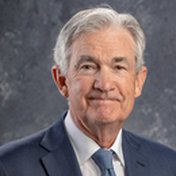 Jerome H. Powell
December 18, 2024 FOMC Press Conference
- The chair said the economy grew at an annual rate of 2.8 percent in the third quarter, about the same pace as the second quarter.
- The chair said the median projection for the federal funds rate is 3.9 percent at the end of next year and 3.4 percent at the end of 2026, higher than in September.
- The chair said the policy rate has been lowered by a full percentage point from its peak, making the stance "significantly less restrictive."
- The chair said some FOMC participants incorporated "highly conditional estimates" of policy effects into their forecasts, while others did not, citing policy uncertainty as a reason for slower rate cuts.
- The chair said the September 2018 Tealbook alternative simulations on tariffs are a "good starting point" for analysis, but the FOMC has not yet faced the question of how to respond to actual tariff policies.
From the opening statement
Press conference
CHAIR POWELL. Good afternoon. My colleagues and I remain squarely focused on achieving our dual-mandate goals of maximum employment and stable prices for the benefit of the American people. The economy is strong overall and has made significant progress toward our, our goals over the past two years. The labor market has cooled from its formerly overheated state and remains solid. Inflation has moved much closer to our 2 percent longer-run goal.
We’re committed to maintaining our economy’s strength by supporting maximum employment and returning inflation to our 2 percent goal. To that end, today, the Federal Open Market Committee decided to take another step in reducing the degree of policy restraint by lowering our policy interest rate by ¼ percentage point. We also decided to continue to reduce our securities holdings. I’ll have more to say about monetary policy after briefly reviewing economic developments.
Recent indicators suggest that economic activity has continued to expand at a—at a solid pace. GDP rose at an annual rate of 2.8 percent in the third quarter, about the same pace as in the second quarter. Growth of consumer spending has remained resilient, and investment in equipment and intangibles has strengthened. In contrast, activity in the housing sector has been weak. Overall, improving supply conditions have supported the strong performance of the U.S. economy over the past year. In our Summary of Economic Projections, Committee participants generally expect GDP growth to remain solid, with a median projection of about 2 percent over the next few years.