June 13, 2018
Statement·Presser·Minutes·Policy
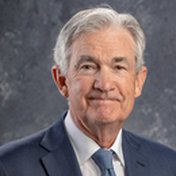 Jerome H. Powell
June 13, 2018 FOMC Press Conference
- The Fed will hold a press conference after every scheduled FOMC meeting starting in January, a change that does not signal any shift in the timing or pace of rate changes.
- The median projection for the federal funds rate is 2.4 percent at the end of 2018, 3.1 percent at the end of 2019, and 3.4 percent at the end of 2020, modestly above the estimated longer-run level by 2020.
- The FOMC removed language stating that the federal funds rate is likely to remain below longer-run levels for some time, reflecting that the rate will move well within the range of normal long-run estimates over the next year or so.
- The IOER rate is now set 5 basis points below the upper end of the target range to keep the federal funds rate closer to the middle, a technical adjustment with no bearing on the policy path.
- Concerns about changes in trade policy are arising among business contacts, with some reports of companies holding off on investments and hiring, though these are not yet visible in the economic data.
From the opening statement
Press conference
CHAIRMAN POWELL. Good afternoon. Thanks very much for being here. I know that a number of you will want to talk about the details of our announcement today, and I am happy to do that in a few minutes. But because monetary policy affects everyone, I want to start with a plain-English summary of how the economy is doing, what my colleagues and I at the Federal Rese rve are trying to do, and why.
The main takeaway is that the economy is doing very well. Most people who want to find jobs are finding them, and unemployment and inflation are low. Interest rates have been low for some years while the economy has been recovering from the financial crisis. For the past few years, we have been gradually raising interest rates, and along the way we’ve tried to explain the reasoning behind our decisions. In particular, we think that gradually returning interest rates to a more normal level as the economy strengthens is the best way the Fed can help sustain an environment in which American households and businesses can thrive. Today, we’ve taken another step in that process by raising our target range for the federal funds rate by ¼ of a percentage point.
My colleagues and I meet eight times a year and take a fresh look each time at what is happening in the economy and consider whether our policy needs adjusting. We don’t put our interest rate decisions on hold or on autopilot, because the economy can always evolve in unexpected ways. History has shown that moving interest rates either too quickly or too slowly can lead to bad economic outcomes. We think the outcomes are likely to be better overall if we are as clear as possible about what we are likely to do and why. To that end, we try to give a sense of our expectations for how the economy will evolve and how our policy stance may change.